7 Days Cairo, Sharm El Sheikh & Catherine
Cairo → Sharm El Sheikh → Sinai → Cairo
From / person$1,100
View tour 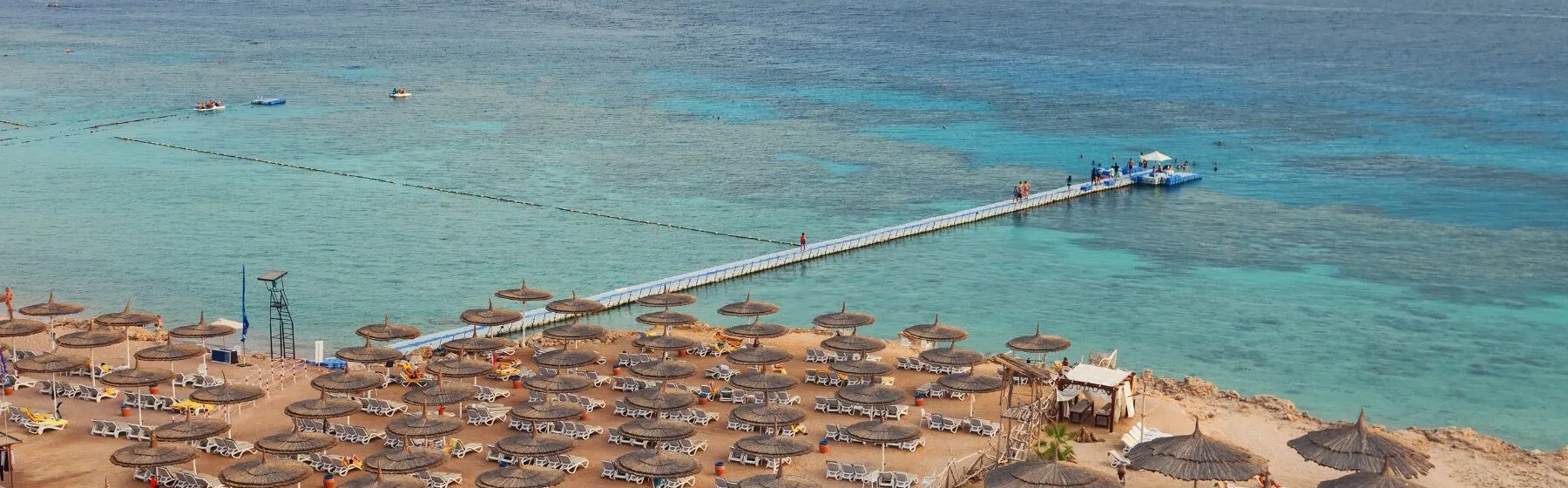
The southern tip of Sinai — Ras Mohamed, the Blue Hole at Dahab, and St Catherine's Monastery in the mountains behind.
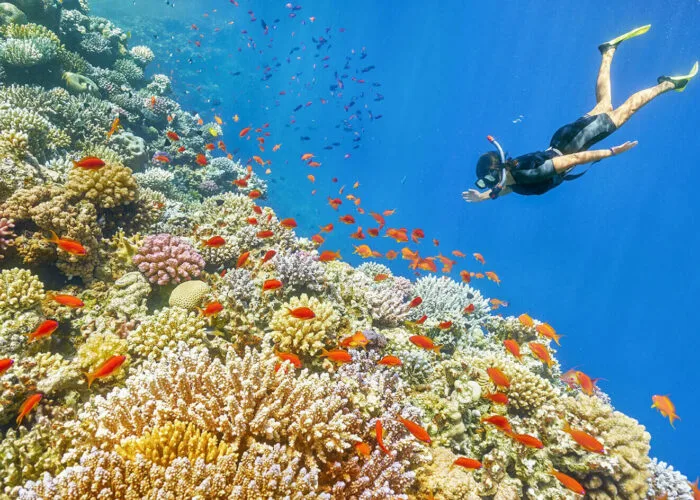
Sharm El Sheikh sits where the Gulf of Aqaba meets the Red Sea, and the water is the reason the town exists. Ras Mohamed National Park, at the very tip of the peninsula, protects the reef walls where the two bodies of water meet — it was Egypt's first national park and remains its best-known dive site. Naama Bay and Sharks Bay hold most of the hotels.
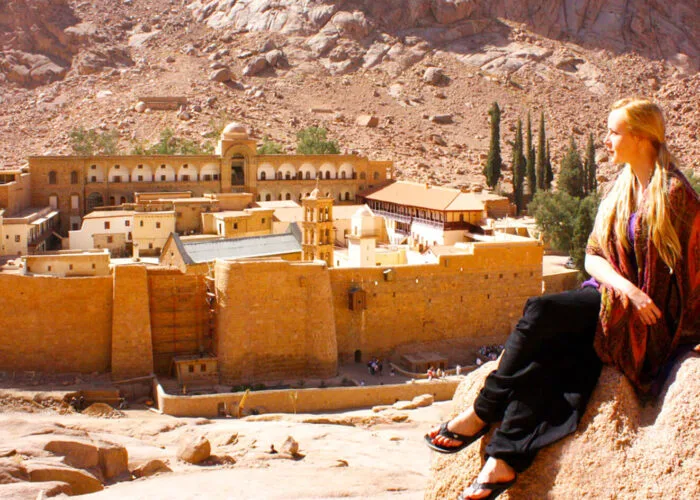
North along the coast, Dahab is quieter and holds the Blue Hole, a submarine sinkhole that is both famous and genuinely dangerous at depth. Inland, the Sinai mountains rise to Mount Sinai, with St Catherine's Monastery at its foot — a working Greek Orthodox monastery founded in the sixth century and one of the oldest continuously inhabited in the world.
Most people come for a week of sea with one or two days inland. The classic inland trip is the overnight climb of Mount Sinai to reach the summit at sunrise, followed by the monastery in the morning.
Sharm El Sheikh is the main resort town of South Sinai and the base for the reefs of the Gulf of Aqaba. Ras Mohamed National Park, twenty minutes south, has the steepest reef walls in Egyptian waters and is the reason Sharm built its reputation among divers long before it became a general resort.
The peninsula also holds the other half of the trip. St Catherine's Monastery, about two and a half hours inland, sits at the foot of the mountain of the biblical account and holds an extraordinary collection of early icons and manuscripts. Mount Sinai itself is climbed overnight by most visitors so they reach the summit for sunrise.
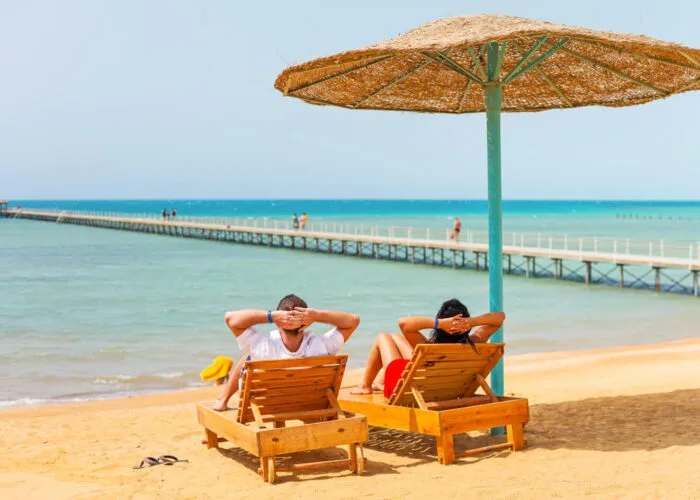
Sharm has its own international airport. The water is calm and shallow at the edge in most bays, which is why it suits families as readily as it suits divers.
 Tailor-made trips
Tell our consultants where you want to go, how long you have and how you like to travel — and get a personalized Egypt itinerary within 24 hours.